
Creative Robotics Theatre – Workshop
ACM Designing Interactive Systems 2024 (DIS 2024)
Location: 3A52, IT University, Copenhagen, Denmark
Date and Time: 2 July 2024, 9 am to 5 pm
Workshop Video:
Workshop Description on ACM Digital Library:
Hooman Samani, Vali Lalioti, Diana Alina Serbanescu, Joana Chicau, Doros Polydorou, George Rodosthenous, Amelia Knowlson, Yorgos Bakalos, Michael Neale, and Bipin Indurkhya. 2024. Creative Robotics Theatre: Designing Creative Interactions with Tangible and Embodied Interfaces. In Companion Publication of the 2024 ACM Designing Interactive Systems Conference (DIS ’24 Companion). Association for Computing Machinery, New York, NY, USA, 389–391. https://doi.org/10.1145/3656156.3658387
Creative Robotics Theatre group on LinkedIn:
https://www.linkedin.com/groups/9862522/
DIS Workshop Registration Code:
W8-ROBOTHEA
Note: The workshop is full and you would be put on the waiting list.
Schedule:
| 09:00 – 09:10 | Welcome / Intros |
| 09:10 – 09:30 | Warm up Activity |
| 09:30 – 10:30 | Keynote by Elizabeth Jochum, Rehearsal for the Robot Revolution |
| 10:30 – 11:00 | Coffee break / Networking |
| 11:00 – 12:30 | Accepted submissions presentations. Part I. 10 Min each. |
| 12:30 – 14:00 | Lunch / Networking |
| 14:00 – 14:30 | Embodied activity with robots |
| 14:30 – 15:30 | Accepted submissions presentations. Part II. 10 Min each. |
| 15:30 – 16:00 | Coffee break / Networking |
| 16:00 – 16:45 | Mind mapping activities with robots |
| 16:45 – 16:55 | Wrap up / Next steps |
| 16:55 – 17:00 | Cool down activity |
Accepted Submissions:
| Number | Title | Presenter |
| 1 | A Constructed Response: Designing and Choreographing Robot Arm Movements in Group Dance Improvisation | Ray LC & Xiaoyu Chang |
| 2 | Choreographic performance installations based on mechanical structure design | Mengyun Liu, Annisa Cinderakasih, Naitian Zhang |
| 3 | My three days with Qoobo, Robotic companions and the creative process | Vali Lalioti & Yorgos Bakalos |
| 4 | Can quadcopter drones be lively | Alex Zafiroglu, Pallavi Laxmikanth, Mina Henein, Xuanying Zhu |
| 5 | Dance, Robots and Different Bodies | Rachael Garrett, Steven Benford, Pat Brundell, Praminda Caleb-Solly, Simon Castle-Green, Kathleen Hawkins, Kate Marsh, Paul Tennant, Sarah Whatley, Feng Zhou, Kristina Höök |
| 6 | Role-Play Methods to Explore Social Dynamics in Human-Robot Groups | Judith Dörrenbächer, Tuan Vu Pham, Thomas H. Weisswange, Marc Hassenzahl |
| 7 | Questioning AI Through a Hybrid Showroom Exhibition | Michele Cremaschi |
| 8 | Verse in the Machine: AI Poetry Open-air Performance | Karolina Źróbek, Michał Bednarczyk, Antonio Galiza Cerdeira Gonzalez |
| 9 | Participatory robot theatre to envision everyday life with robots: A field report | Rosan Chow, Jessica Glanz, Lars Boettger, Debora Frommeld, Jana Stadlbauer, Karsten Weber |
| 10 | Exploring attitudes towards robots through puppetry art | Eszter Angéla Kocsis |
| 11 | Bringing human-machine play to the stage | Ville Vakkuri, Paul Haimes |
| 12 | Creating social experiences in public spaces using immersive technologies | Noak Petersson |
| 13 | Animating Performance Artefacts | Ruairi Glynn |
| 14 | Real-world, live simulations in scientific research | Pericle Salvini, Alan Winfield, Marina Jirotka |
Keynote:
Keynote Speaker:
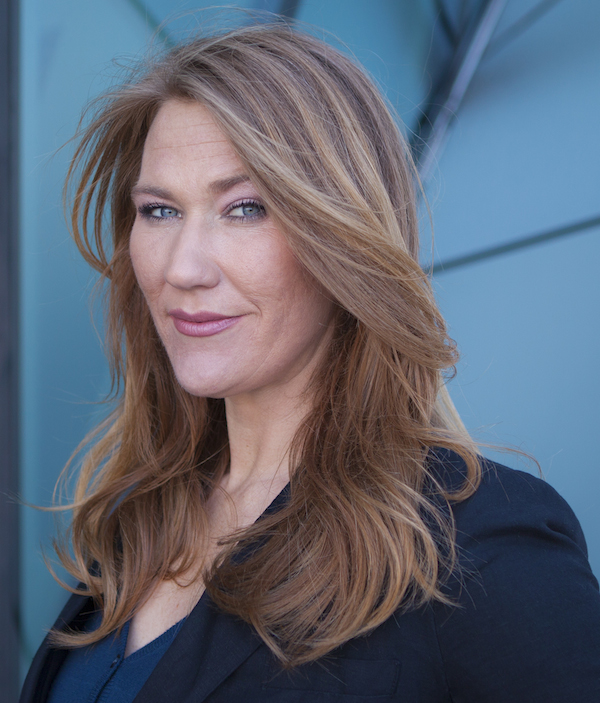
Elizabeth Jochum
https://vbn.aau.dk/en/persons/128508
Title:
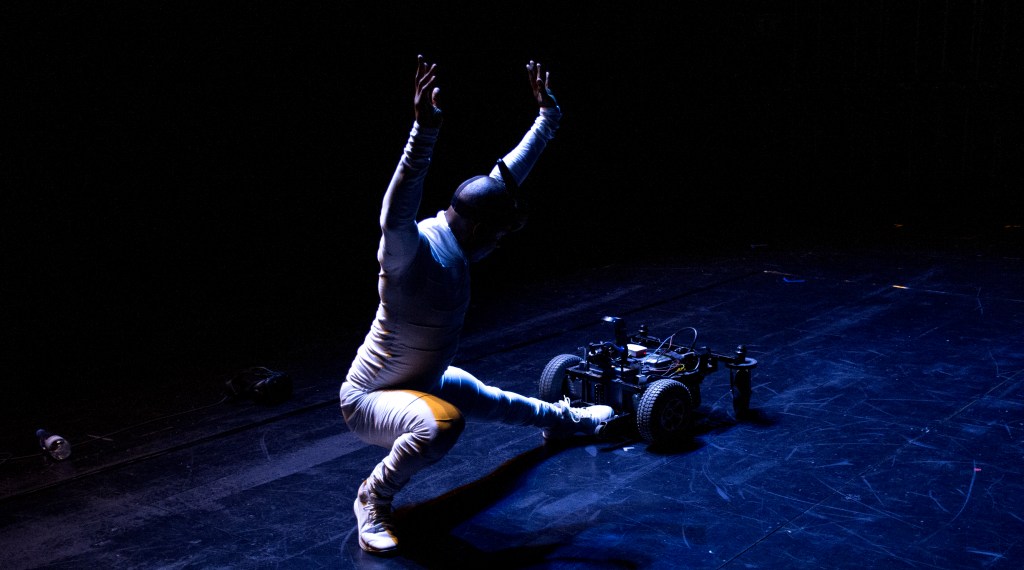
Rehearsal for the Robot Revolution
Biography:
Dr. Elizabeth Jochum is an associate professor in the RELATE Research Laboratory for Art and Technology at Aalborg University in Denmark. Her research leverages the visual and performing arts as catalysts for re-thinking how we design and integrate robots and other technologies into everyday life, from industrial robots to androids to exoskeletons to industrial robots. Over the past 15 years, Dr. Jochum has directed numerous live productions with robots, and coordinated the European project on Artificial Biology, Robotics and Art (ABRA). She is the lead investigator on ImprovAIze, a research platform that combines machine learning, dance improvisation, and wearables for artistic practice and rehabilitation. In 2021 she was named one of the top 50 Women in Robotics by Robohub.
Abstract:
This talk charts the appearance of robots in contemporary performance and considers the philosophical, political, and aesthetic concerns they raise. From industrial robots to ultra-realistic humanoids, public fascination with robots and the proliferation of AI have sparked a rich period of experimentation by theater and performance artists. Theater provides a site for rethinking and reconfiguring our interdependent and evolving relationship with machines, and robots present new dramaturgical considerations for artists. Robots on stage create possibilities for robot actors to function not only as sophisticated technological puppets, but as performers in their own right. This talk identifies four paradigms in robot performance: mimesis, communication and control, machine ecologies, and hybridity. Through these paradigms, we witness how robots on stage both reprise old anxieties and stoke new fears about technology while also functioning as catalysts for reimagining hybrid futures and new ways of relating to machines.
Workshop Organisers:

Dr Hooman Samani is a creative robotics reader and course leader at the Creative Computing Institute, University of the Arts London. He is a Fellow of the UK Higher Education Academy (FHEA). He has contributed to more than 100 publications and organisation of more than 100 conferences and workshops in the field of robotics. He has been featured in international media such as Discovery Channel, New Scientist, Wired, Arte, BBC and CNN for his pioneering work in creative robotics.

Prof. Vali Lalioti, Creative XR and Robotics, is a pioneering designer, computer scientist and innovator. She is the Director of Programmes at the Creative Computing Institute (CCI), University of Arts London (UAL). Vali’s robotics research focuses on human-robot interaction and designing robotic movement with culture in mind and for societal applications including well-being, healthy ageing and the performing arts. Vali’s research has been published extensively in books, academic journals and international conferences. Her VR/AR and robotic designs won innovation awards and she’s been interviewed by WIRED, Dezeen, BBC Horizon and the UK press.

Dr Diana Alina Serbanescu combines extensive experience as both an artist, creative technologist and a scholar, specialising in the realms of performing arts, critical media theory, and the ethics of artificial intelligence (AI). Her practice-based research focuses on bringing the body and its politics to the centre of technological discourse and re-envisioning technologies through a feminist lens. Serbanescu is currently a senior lecturer on the creative robotics MSc at the Creative Computing Institute, University of the Arts London.
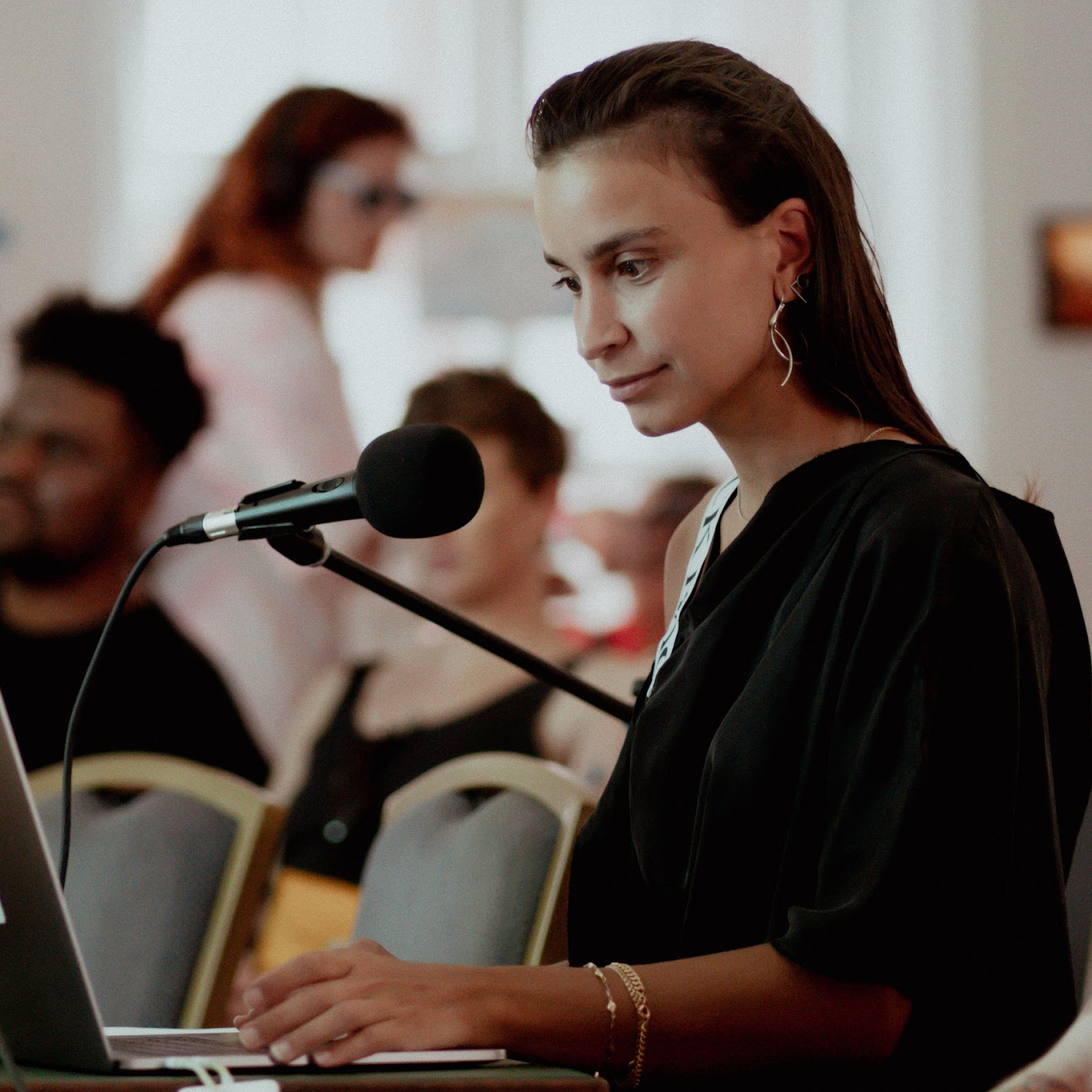
Joana Chicau [she/ela] is a designer — with a background in dance. She researches the intersection of the body with the designed and programmed environment, aiming at widening the ways in which computer science is presented and made accessible to the public. She co-organises events involving collaborative algorithmic improvisation and community round-tables on digital equity and activism. Chicau is a lecturer (FHEA) and a PhD candidate at the Creative Institute, University of the Arts London.
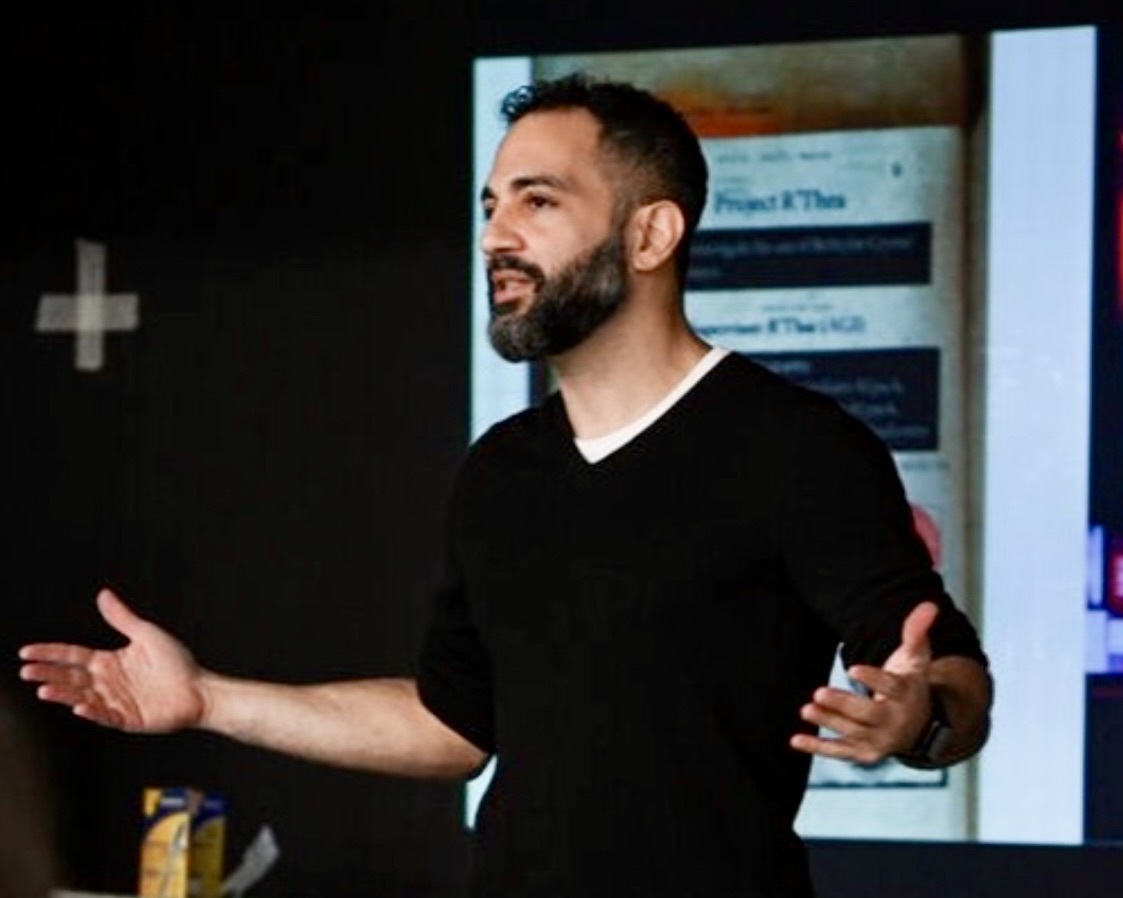
Dr Doros Polydorou is an Associate Professor at Cyprus University of Technology. He is a creative coder and digital artist with a keen interest in immersive technologies and technological embodiment. He is the co-founder of the Media Arts and Design (MAD) lab, and his research interests explores narratives, artefacts and immersive technologies in site specific performances, installations, and exhibitions.

Prof. George Rodosthenous is Professor of Theatre Directing at the School of Performance and Cultural Industries, University of Leeds. His research interests are the body in performance, refining improvisational techniques and compositional practices for performance, devising pieces with live musical soundscapes as interdisciplinary process, theatre directing, updating Greek tragedy and the British musical.
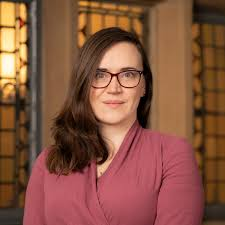
Dr Amelia Knowlson is a lecturer in Digital Creativity with an expertise in the creation and curation of digital heritage artifacts. Her work includes the replication of culturally significant artifacts as well as curated exhibitions that have shown across the UK.

Yorgos Bakalos is a seasoned professional in the realm of performing arts and a dedicated theatre maker with over two decades of experience. With a rich portfolio of over 30 collaborative projects across Europe, including notable names like Romeo Castellucci and La Fura dels Baus, Yorgos is a versatile performer and director. Alongside his performance and directing career, he excels as a lecturer and workshop facilitator, specialising in physical theatre and digital performance.

Michael Neale is an independent theatre artist and lecturer in Acting, Performing Arts and Live Events Production with over 20 years experience working as a freelance actor/director and as a teacher of performance practices. He has particular interests in physical performance, devising, audience immersion, digital theatre and creative collaboration.
Prof. Bipin Indurkhya is a professor of Cognitive Science at the Jagiellonian University, Krakow, Poland. His main research interests are social robotics, usability engineering, affective computing and creativity. He has taught at various universities in the US, Japan, India, Germany and Poland; and has led national and international research projects with collaborations from companies like Xerox and Samsung.
CFP:
Call for workshop papers, videos, pictorials, design explorations and performances
Join us at DIS 2024 for an innovative workshop exploring the confluence of robotics, theatre, and societal change. We are seeking artists, technologists, researchers, and practitioners interested in pushing the boundaries of Creative Robotics Theatre to enhance societal well-being and address global challenges.
We invite submissions that explore the integration of robotics in performing arts and its impact on society. Contributions can include but are not limited to, theoretical papers and pictorials, tech-theatre design explorations, case studies, co-design and participatory methodologies co-design and participatory methodologies and proposals for interactive demonstrations or performances. Submissions should highlight innovative approaches to robotic design and the role of technology in theatre and societal engagement.
Submission Guidelines:
- Abstracts: 300-500 words outlining your contribution. You can also include images, video or media links to support your submission.
- Format: The submission file should be in PDF format. However, the content within the PDF can be in a free format based on your preference.
- Submission: email h.samani@arts.ac.uk with title Creative Robotics Theatre workshop, DIS 2024.
- All submissions will undergo a peer-review process, with selected contributions invited for presentation at the workshop.
About the Workshop
Participants will engage in discussions, hands-on activities, and collaborative sessions aimed at defining Creative Robotic Theatre and its applications. The workshop will serve as a pilot bringing together a community of research and practice, developing design toolkits and co-design methodologies. Accepted submissions will be considered for the proposal of special issue in the International Journal of Performance Arts and Digital Media.
Topics of interest (including but not limited to):
- Creative robotics theatre
- Robotics performance
- Embodied and tangible interfaces and performances
- Performance with embodied objects
- Technological embodiment in performance
- Virtual/Remote theatrical playgrounds
- Drone performance
- Interactive storytelling with robots
- Robot choreography and dance performances
- Robotics in puppetry and marionette theatre
- Wearable technology and costumes in robotic performances
- Ethical and social implications of robotic theatre
- Collaborative creation processes in robotic performance
- Sound design and music composition for robotic performances
- Adaptations of classic plays and literature with robotics
- Human-Robot Interaction in performance art
Important Dates:
Submission deadline: 31 May 2024
Workshop date: 2 July 2024
 Hooman Samani