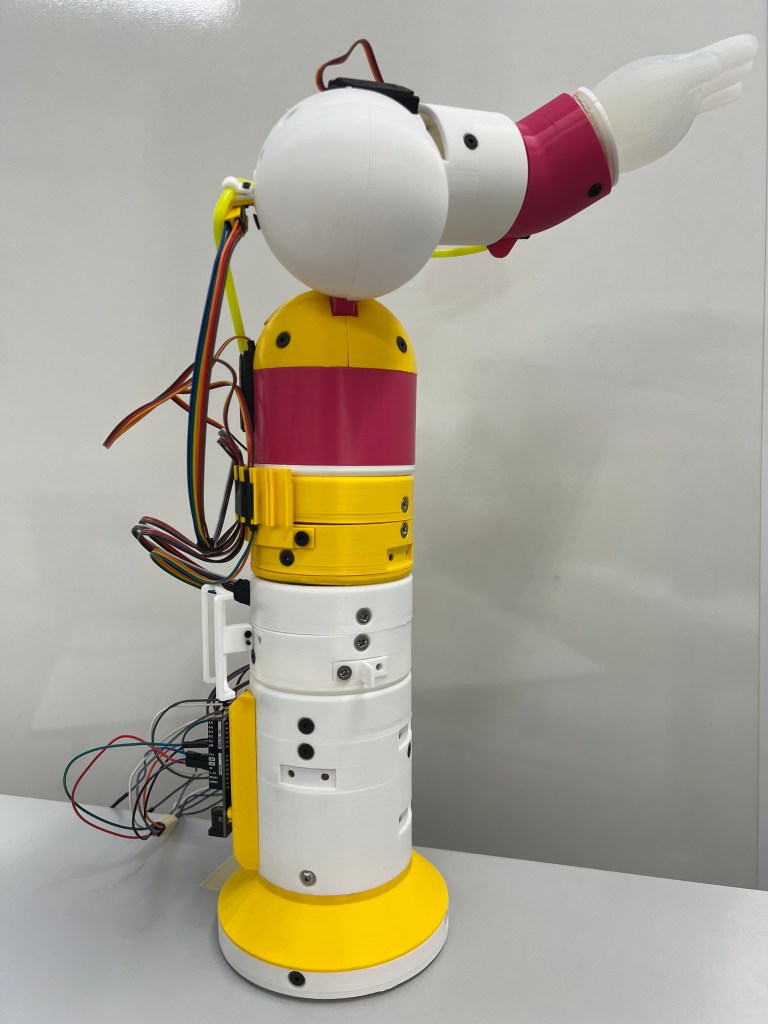
SLAPBOT is an interactive robotic artwork by Hooman Samani and Cheng (Chandler) Chang, exploring the dynamics of physical interaction, artificial agency, and power. The installation features a robotic arm fitted with a soft, inflatable hand that delivers slaps through pneumatic actuation, transforming a visceral human gesture into a programmed robotic response.
Rooted in the emerging discourse of critical and creative robotics and informed by the field of Lovotics, SLAPBOT recontextualises the act of slapping as a form of mechanised communication. Removed from its emotional and cultural origins, the slap becomes an abstract, depersonalised expression. It is precise, repeatable, and stripped of human intention, prompting reflection on the shifting boundaries of control, vulnerability, and physical presence in our interactions with machines.
Rather than offering touch as a site of care or connection, SLAPBOT introduces confrontation as a mode of engagement. This inversion challenges viewers to reconsider their assumptions about empathy, dominance, and reciprocity in human-robot relationships. As a gesture that oscillates between discipline and absurdity, the robotic slap becomes a symbol of power negotiation in the post-human condition.
Through its stark, affective language of motion, SLAPBOT opens a conceptual space where emotional robotics meets critique. It invites dialogue on the ethics of embodiment, the politics of touch, and the evolving nature of agency in intelligent systems designed not just to serve, but to feel, provoke, and resist.
Despite its provocative concept and evocative design, SLAPBOT does not make physical contact with human participants. It simulates the gesture of slapping without delivering an actual strike. The robotic arm’s movements are precisely choreographed to suggest the act, yet it maintains a safe distance. In the exhibition space, this interactive installation is displayed within a clear acrylic enclosure, reinforcing the physical and symbolic separation between viewer and machine. Viewers can activate the robot using a sound sensor, such as by clapping or speaking, which triggers the slapping gesture without any direct physical interaction. This deliberate non-contact heightens the work’s conceptual tension: it gestures towards action without enacting harm, emphasising the symbolic over the physical. In doing so, SLAPBOT underscores the performative nature of robotic interaction, allowing viewers to confront their responses to the idea of the slap without experiencing its impact.
 Hooman Samani