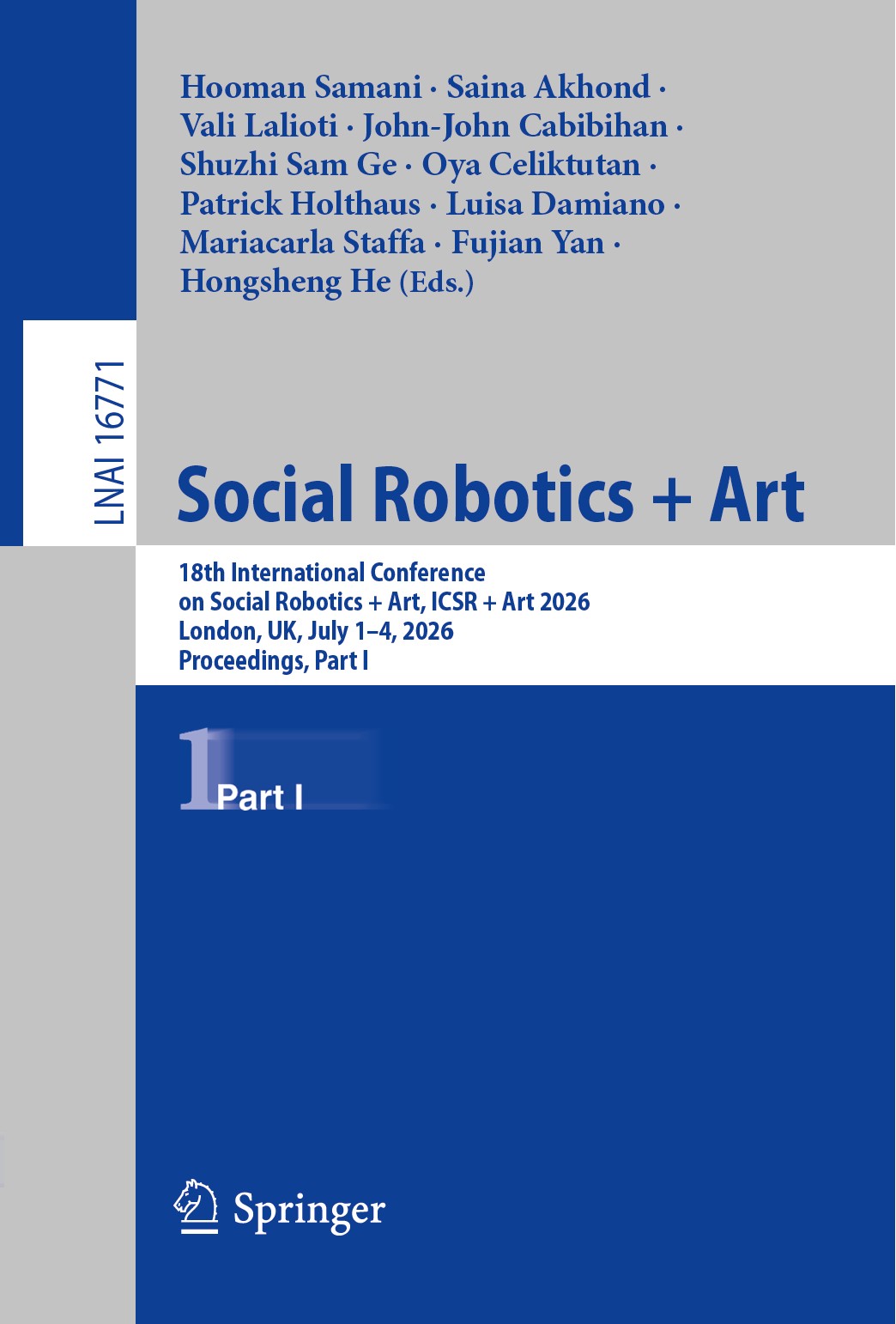

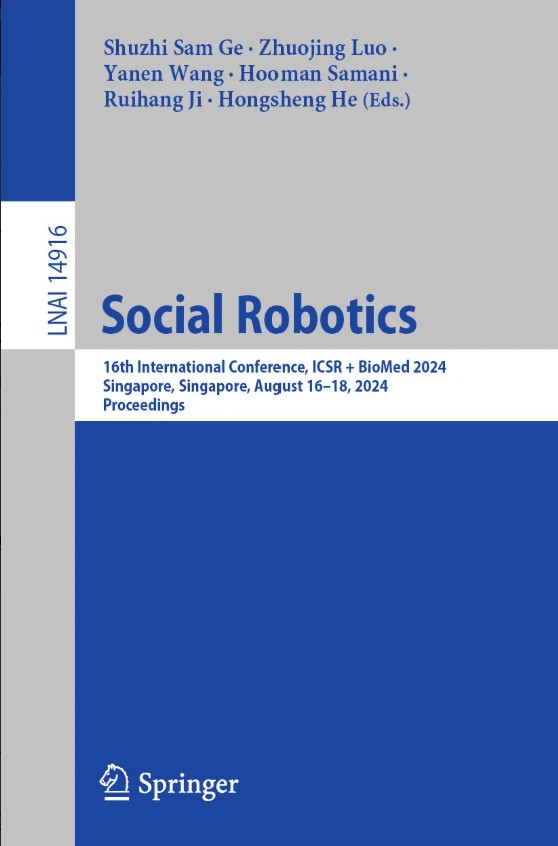
Social Robotics is the field of robotics concerned with designing systems that can interact with people in ways that feel natural, engaging, and socially appropriate. Unlike industrial robots built to operate in isolation on factory floors, social robots are designed to work alongside, communicate with, and respond to humans directly, often in homes, schools, hospitals, care settings, public spaces, and even on stage.
At its core, Social Robotics draws on insights from psychology, sociology, linguistics, and design to help robots recognise and respond to human emotions, gestures, speech, and social cues. A social robot might use facial expressions, tone of voice, eye contact, or body language to build rapport, offer companionship, or provide assistance in a way that feels comfortable rather than mechanical.
A brief background
The field emerged from the recognition that as robots leave controlled industrial environments and enter everyday human spaces, technical competence alone is not enough. A robot that can navigate a room or grasp an object still fails if people find it unsettling, confusing, or untrustworthy to interact with. Social Robotics grew out of earlier work in human-computer interaction and human-robot interaction, but it goes further by treating social behaviour, not just usability, as a core engineering requirement. Researchers in this area often work closely with roboticists, cognitive scientists, designers, and, increasingly, artists to study how people perceive robots as social agents rather than mere tools.
Much of this research relies on distinctive methods, including Wizard-of-Oz studies, where a robot appears autonomous but is in fact partly or fully controlled by a hidden human operator. This allows researchers to test people’s reactions to social behaviours before the underlying autonomy has been fully engineered.
Core areas of research
Research in this field spans a broad and still-growing set of topics, including but not limited to:
- Non-verbal communication: How robots use gaze, posture, gesture, and proxemics (the use of physical space) to signal intent and emotion.
- Speech and dialogue: Natural language interaction that allows robots to hold conversations, understand context, and respond appropriately to tone and phrasing. Large language models have recently expanded what robots can plausibly say and understand, though grounding fluent conversation in a robot’s physical actions and real-world context remains an open problem.
- Affective computing: Enabling robots to detect human emotional states through facial expression, voice, and behaviour, and to respond in emotionally appropriate ways.
- Theory of mind and intention modelling: Enabling robots to infer what a person believes, wants, or intends, not just how they currently feel, so that behaviour can be anticipated rather than only reacted to.
- Social navigation: Designing movement and path-planning behaviour that respects personal space, right-of-way, and social convention, so a robot can move through crowds or shared environments without startling or obstructing people.
- Multi-party interaction: Managing attention, turn-taking, and engagement when a robot interacts with several people at once, rather than a single user, as is common in classrooms, receptions, and care settings.
- Touch and haptic interaction: Understanding how robots give and receive physical touch as a channel of comfort, reassurance, or therapy, distinct from gaze, speech, or gesture.
- Trust and acceptance: Understanding what makes people willing to rely on, follow instructions from, or feel comfortable around a robot over repeated interactions.
- Long-term interaction: Studying how relationships between humans and robots evolve over weeks or months, rather than a single encounter, and how novelty effects fade over time.
- Embodiment and appearance: Examining how a robot’s physical form, from humanoid to animal-like to purely functional, shapes expectations and social responses, including the tendency of people to anthropomorphise machines and the discomfort that can arise when a robot’s appearance is almost, but not quite, human.
- Expressive movement and performance: Exploring how timing, rhythm, and gesture allow a robot to appear expressive, improvisational, or even artistic, rather than purely functional.
Why it matters
Social robots are finding a place in an expanding range of everyday and specialised contexts, among them:
- Companionship and wellbeing: Social robots are increasingly used to support elderly people, reduce loneliness, and provide comfort to children in hospitals or those with additional needs.
- Education and learning: Robots that can hold a learner’s attention and adapt to their emotional state are being used as tutors and learning companions, particularly for language learning and STEM subjects.
- Healthcare and therapy: Social robots assist with rehabilitation, therapy for autism spectrum conditions, and mental health support, often lowering the pressure people feel compared to interacting with another human.
- Everyday assistance: From customer service to household help, social robots are designed to make technology feel approachable and trustworthy.
- Workplace collaboration: As robots increasingly work alongside people in offices, warehouses, and shared spaces, social competence helps them coordinate smoothly with human colleagues rather than simply avoiding collision.
- Art and performance: Robotic artists and performers explore what it means for a machine to express emotion, tell a story, or improvise alongside human musicians, dancers, and actors, offering audiences new ways to think about companionship, identity, and creativity in machines.
Not every socially promising robot succeeds outside the lab. Several well-regarded projects have struggled to find a lasting commercial footing even after strong research results, a reminder that engaging short-term interaction does not automatically translate into sustained real-world adoption.
Application domains
Social robots are being developed and trialled across a wide range of settings. In eldercare, they offer reminders, monitor wellbeing, and provide social contact for people living alone. In education, they act as patient, non-judgemental tutors that can adjust their teaching style to a child’s pace. In healthcare, they support physical rehabilitation exercises and offer a consistent, engaging presence during repetitive therapy sessions. In retail and hospitality, they greet customers, answer questions, and guide visitors. In the arts, they appear in installations, exhibitions, and live performances as expressive collaborators rather than task-oriented tools, prompting audiences to reconsider what counts as “alive” or “expressive” in a machine. In research labs, they serve as platforms for studying fundamental questions about how humans form relationships with non-human agents. These examples are illustrative rather than exhaustive, as new application domains continue to emerge.
Key challenges
Designing effective social robots is not simply a matter of adding a friendly face to a machine. Genuine social intelligence requires robots to interpret ambiguous human behaviour, adapt to individual personalities and preferences, and behave consistently and ethically over long-term relationships. Several open challenges continue to shape the field, among others:
- Ambiguity and context: Human social signals are often subtle or contradictory, and robots must cope with situations their designers never anticipated.
- Individual and cultural variation: What counts as polite, friendly, or appropriate differs from person to person and community to community, making one-size-fits-all behaviour difficult to achieve.
- Emotional manipulation and dependency: There are ethical concerns about robots being designed to exploit human emotional responses, or users forming unhealthy attachments to robotic companions.
- Simulated emotion and deception: A related and ongoing debate concerns whether it is acceptable for a robot to convincingly display affection, empathy, or care it does not “have,” and how transparent designers owe it to be about that gap.
- Privacy: Social robots often rely on cameras, microphones, and behavioural data to function, raising questions about consent, data protection, and surveillance.
- Novelty versus longevity: Many social robots perform well in short demonstrations but struggle to sustain engagement once the initial novelty wears off.
- Trust calibration: Ensuring people neither over-trust a robot’s abilities nor dismiss it unfairly is a delicate balance that affects safety and adoption.
Major venues in the field
Social Robotics has its own dedicated research community, with two major venues bringing together researchers from around the world:
- Conference: ICSR, International Conference on Social Robotics
- Journal: IJSR, International Journal of Social Robotics
My Involvement
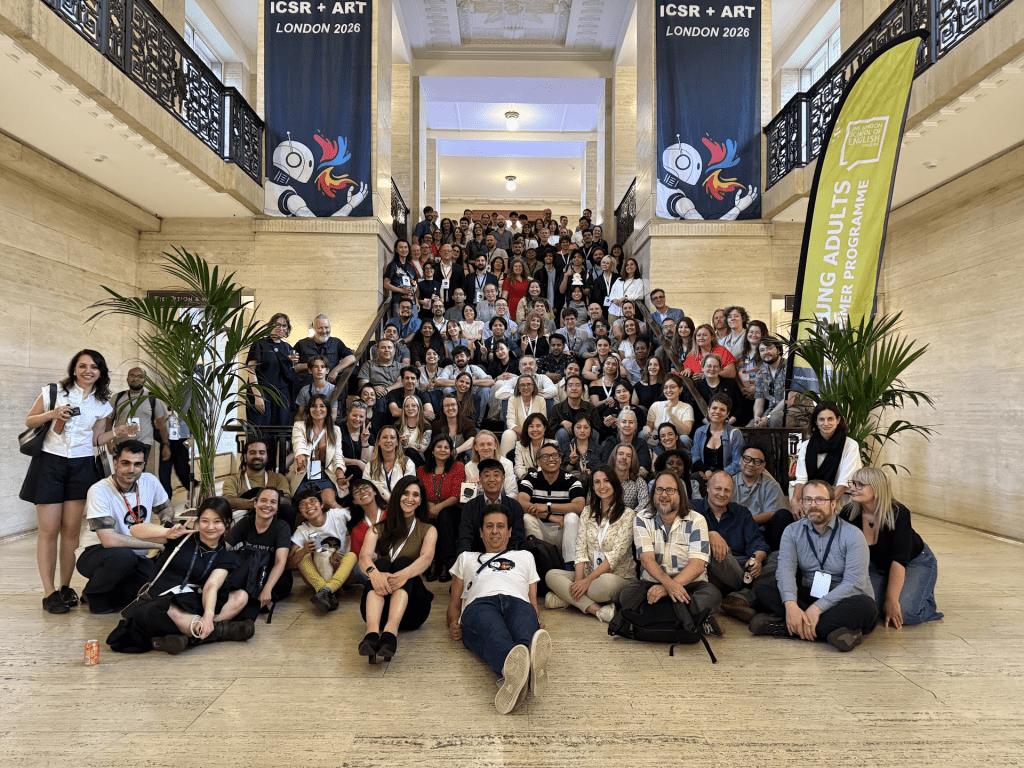
I am an active member of the social robotics community, regularly contributing to its major conferences and journals alongside a wider network of colleagues and collaborators. I am honoured to have been a student of Prof. Sam Ge, the founder of ICSR and IJSR, and to have worked in his lab when both were first established in the early 2000s.
I have served as General Chair of ICSR + Art 2026 (London, UK), Programme Chair of ICSR + Health 2027 (Potsdam, Germany), ICSR + BioMed 2025 (Xi’an, China) and ICSR + BioMed 2024 (Singapore), and Robotics and Art Chair of ICSR + AI 2025 (Naples, Italy) and ICSR + AI 2024 (Odense, Denmark), working alongside dedicated organising committees at each event.
For IJSR, I co-edit the Creative Robotics topical collection.

